
Other people's children
How does a woman without children of her own find her place with somebody else's family?
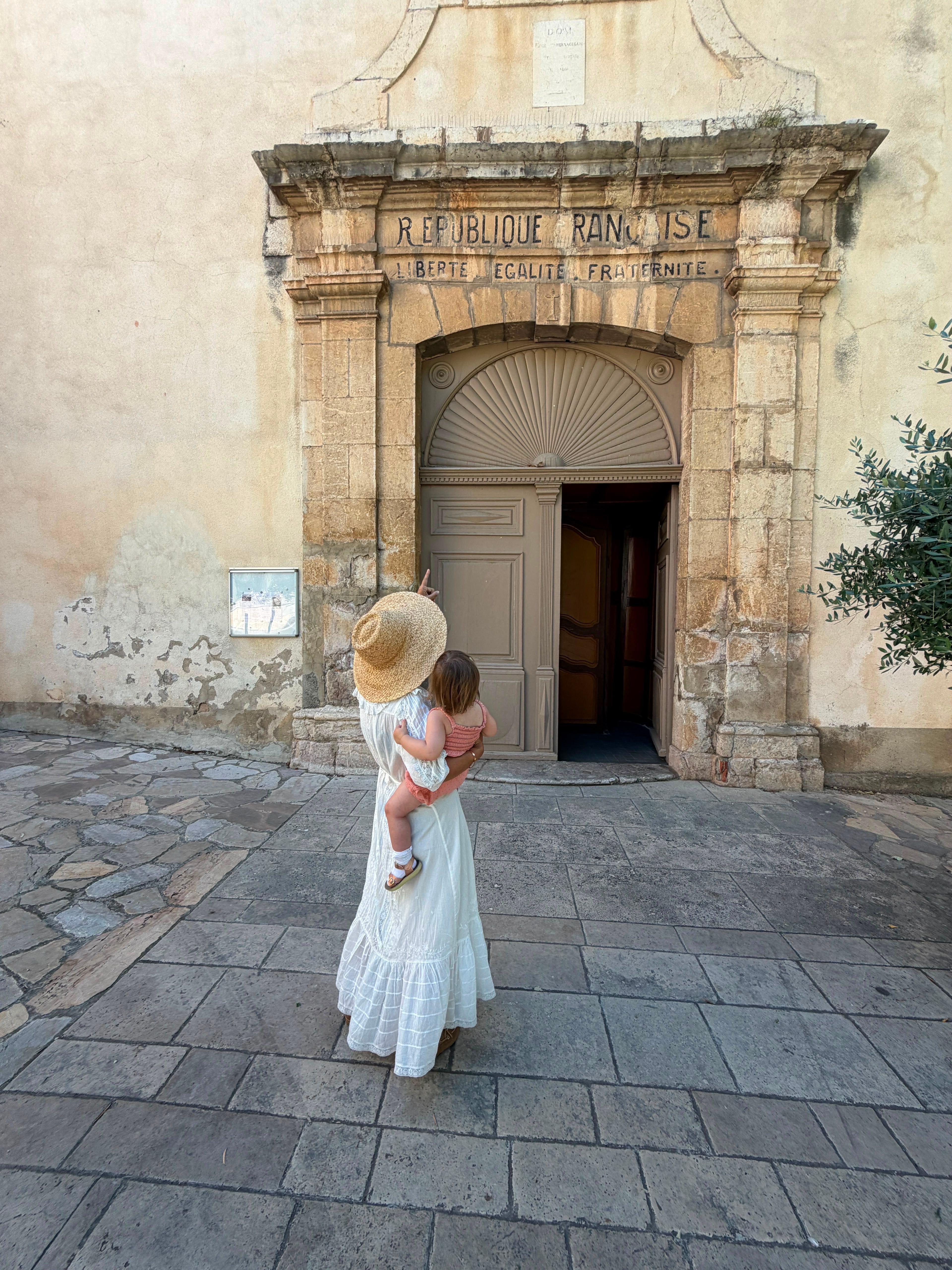
When my nephew was 4 years old I agreed to babysit him. This was the first time either of us had spent any great length of time together, since I had moved to the other side of the world before he had even learned to speak. This meant he knew little about me other than I was a woman who looked vaguely like his mother and with whom he was forced to spend the next two weeks of his life.
Being defined neither by language nor memory I was, unsurprisingly, an unsettling new presence in his life: a figure he understood to be important enough for his parents to travel half way across the world to visit, yet not vital enough to warrant a name.
‘I don’t like you’ he told me within our first few days together, a theme which continued over the following week. My hand was brushed away when I went to hold his, whilst he would wrinkle his nose and rear his head back when I went to kiss him.
I was a 28 year old woman who believed that one day I would have children of my own. My nephew therefore became not just a riddle to be solved, but a battle to be won, proving to myself-more than anyone else, that I was good, solid mother material.
And yet the days dragged on with little sign of a truce. In a final fit of desperation I turned up to my babysitting duties with a shopping bag filled with baking ingredients.
I have an idea, I told him, pulling out a small jar of scarlet food colouring.
Why don’t we make a cake in the shape of Dorothy’s shoes from the Wizard of Oz?
His eyes widened. I had heard that Dorothy and her glittering slippers had become something of a recent curiosity for my nephew. And thus I saw my opening.
That evening he let me wrap a small tea towel around his waist, and hoist him onto a chair so that we stood shoulder to shoulder. We measured out flour, chopped butter, poured out great rivulets of cane sugar and set about our task like two dedicated line chefs.
By the time I fashioned the sponge into the shape of two ruby slippers and presented it to him on a china plate, we had become friends.
That week together taught me a lot about children. Namely the place a woman without children of her own plays in their lives. Which was just as well, because a decade or so later I decided to call time on pursuing motherhood for myself.
The reason for this is as complicated as it is uncomplicated. But for now let’s leave it as this: my husband and I tried, we failed and in between the years of trying and failing we began to see that a life without children might be the right path for us.
My nephew is 21 now. I am 47. Our lives collide as much as they are able too. I travel the world for my work. He is studying for his finals. Yet we choose to have one another in our lives. Lunches. Theatre outings. Instagram DMS (I am deeply honored!). Small moments where I am allowed to ask the questions and he is allowed to decant his life. We then sort through it together- university life, hopes for the future, whether he’s eating properly. That sort of stuff. I probe only as far as he lets me. But my secret hope is he lets me in far more than most.
When I used to fantasize about having children of my own, it was never newborns or toddlers that I envisaged. It was a child on the verge of adulthood. I had a romantic image of us meeting for lunch and talking about interesting things like art and relationships.
The artist Tracy Emin once said: Everyone wants something small to look after, because everyone wants to be powerful.
But I’ve never truly hankered after a baby. And I’ve never, I think, seen loving a child of mine as any form of self love. What I wanted, at least when I look back now, was a project. Someone to guide through the world. Which I suppose is its own form of narcism.
The problem has always been, who would let me guide them?
Something odd happens when you don’t have children- especially if that choice is yours to take rather than a choice that is taken away. You invite suspicion. In pulling away from the social pack, people question why you don’t want what they want. The assumption generally being that you don’t like children.
That assumption, in mine and my husband’s case at least, is wrong.
In fact both my husband and I often prefer the company of children to adults. We enjoy both their honesty and mischievousness. (Attributes which can sometimes only be enjoyed if you are not their parents.) My husband is called Silly Uncle Will by the children on his side of the family; a term of endearment earned through years of threading ten pounds notes into the bottom of sweet packets and tubes of Smarties.
I on the other hand love the depth and emotional openness of young adults. You can ask a teenager how they feel and a whole interior life can tumble out. You can ask a middle-aged adult and get a one word answer.
I know many things about other people’s children; secrets yes, but also dreams, fears, what makes them angry and frustrated. I expect nothing in return, though I presume they expect much from me. Trust, for a start. But also wisdom, if you have any to share. A good ear to listen to their woes, and a mind that resists judgement. Other people’s children expect you to come without the agenda of their parents- and I agree that should be part of the deal.
When you are an adult in a child’s life, bound neither by authority nor blood, that relationship must first be earned and then carefully tended to with all the delicacy of a bonsai tree master. It is one of the few relationships we wade into as grown adults, knowing all the power is with the other person. (No one can judge as harshly as a teenager, or be as dismissive as a 4-year old. I have learned both these things the hard way.)
Because relationships with other people’s children- whether that is nieces, nephews, a friend’s child, a neighborhood kid; is a relationship held together by the finest of threads. Children are not deigned to trust adults other than their own parents. That means they can walk away from you at any given moment.
Understanding from the outset that you can lose something precious, is what keeps us good at our role. (I wish we were so conscientious when it comes to adult relationships); creating both a tension and a point of principle for the childless adult.
I have various relationships with children, all earned over many years. There is my nephew, my nieces, an assortment of other adorable nephews down my husband’s line of the family; various young women who have passed through offices where I have been several rungs ahead of them; there are young women I have mentored and kids I’ve simply taken the time to talk to out at parties given by their parents.
And so what have I learned along the way? First, that by not having children you are able to come into a child’s life and form a radically different relationship with them. You can, should you choose to, represent adulthood without judgement. And that’s important.
Second, by not having children of your own you are able to become an unusual anchor in another person’s life. A parent can be overly emotional about their children’s future (and frankly, I do not blame them to be); but you, you can be invested in their future without sentimentality, or fear or even, whisper it, loading them with lofty, unfulfilled parental ambitions.
Third, you come to them from a rare vantage point, which is to say you are able to see them as individuals, with identities divorced from their parents. Of course, not all childless people do this, but we should all try at least to aim for this. (As a young girl I remember being desperate to be seen as distinct from my father- who though loving was often quarrelsome and bombastic. I had to wait until I was 18 and left home for that to happen.)
I have said that I expect nothing in return for the relationships I have with the many children in my life, but that’s not strictly true. Because actually they give so much back. When you don’t have children in your life, it can be easy to exist only in the dimension of adults; a place where wonder, curiosity and the ability to think the best of everyone is thin on the ground. The children and young adults in my life remind me of the importance to judge every experience on it’s own merit - since age and life experience do not always have the correct answers; as well as the beauty of loving hard, dreaming big and allowing yourself to feel it all.
Society has yet to figure out a role for those of us without children. So I’m going to try and define one for us, content (and respectful) in the knowledge that not all childless adults will be game.
We can be a safe harbor; a wise elder, a place of utter abandon and a person whose role is often defined by the needs of the child standing in front of us.
And I don’t know about you, but that feels like a good thing to be for me.
You can read some of my other essays on being a woman without children here and here. And my forthcoming book, How Not To have Children will be published in spring 2028. All paid subscribers get to follow the book process. You can find out more here.
I would have loved someone like that in my own life 💜
Wise words and a wonderful thought for those who are patronising to those who don't have children. 😘